
One of the main issues users face while working using artificial intelligence is repetitiveness. The AI assistant may give a great answer in one conversation, only to become lost when the next conversation is scheduled. Developers often compensate by repeatedly giving the same information in the form of project files or documentation just to keep the conversation running smoothly.
As AI is integrated into everyday software, the efficiency of this technique will decrease. Intelligent systems require the capacity to hold relevant information, retrieve it instantly, and understand how information evolves as time passes. Memory is becoming an essential element of the contemporary AI architecture.
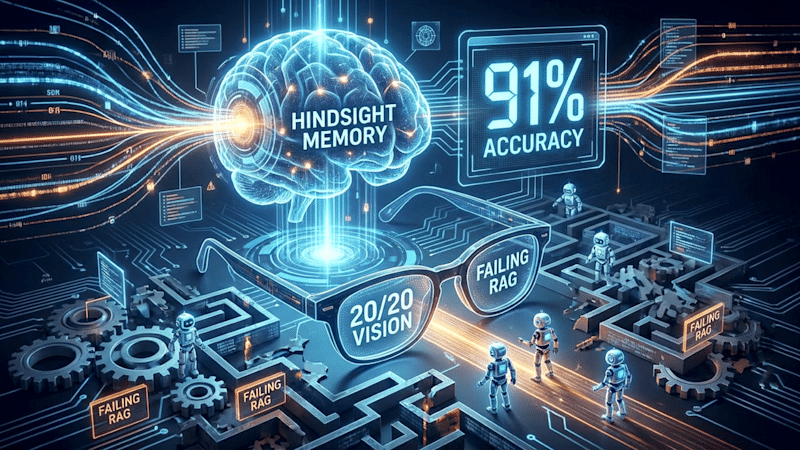
Memory is the key to AI becoming smart.
AI systems that can retain past work will behave differently from those that are able to start fresh each time. Persistent Memory allows applications to detect patterns and comprehend ongoing projects. They can also give responses that are based upon the historical context rather than isolated requests.
Telys was designed to tackle the issue. Telys is an embedded AI memory engine, not a different cloud service. Data is stored and is retrieved directly from the application. This gives developers an efficient method of maintaining an understanding of the situation while reducing unnecessary computation and repetitive processing. This results in an AI experience that feels significantly more natural because the software retains the information that is important.
Make sure data is localized to increase both speed and security
AI models cannot be judged by their ability to produce text. In organizations deploying AI, speed of retrieval, system responsiveness and data security are becoming equally crucial.
Using on-device memory for AI agents allows applications to retrieve relevant information without depending on constant communication with external servers. The memory stays within the local environment, so the queries can be answered more quickly and organizations have greater control over the sensitive information. This architecture is particularly valuable for engineering teams building internal tools, enterprise software, and privacy-sensitive software where data ownership isn’t at risk.
Memory that works behind the scenes can be helpful to developers
For creating intelligent software, it isn’t necessary to maintain complicated infrastructures just to store the context. The majority of developers prefer tools that seamlessly integrate into existing workflows, without the need for extra operational costs.
Local MCP memory server makes this possible through allowing compatible AI development environments access to persistent memory within the local ecosystem. AI assistants do not have to keep transferring data between remote APIs. Instead, they are able to access the information they require through local memory layers. This streamlined approach decreases latency and creates a smoother experience for developers working on big projects with a constantly changing codebase.
The future of AI is built on lasting context
Artificial intelligence has advanced from simple conversations to long-running systems that are capable of planning, analyzing, and completing tasks independently. These systems require a solid memory to store data across all interactions.
Telys is a standout as an advanced AI memory engine, offering persistent local retrieval designed for applications that need speed along with security, reliability and. Telys incorporates an on-device AI memory agent with the highest performance local MCP memory service to help developers create software which remembers prior work, retrieves data immediately and grows over the period of time.
The ability to recall correctly can be as important as the ability to reason as AI becomes more integrated into the business and product. Telys’ AI application development tool aids developers to build AI applications with more speed, intelligence, and usefulness at work by providing intelligent systems a continuous context instead of a brief conversation.