
A total server outage is rarely preceded by flawless operation without some advance warning. Storage utilization gradually increases, memory usage starts fluctuating unexpectedly, scheduled backups no longer finish successfully, or an application begins responding more slowly than usual.
These symptoms can go unrecognized for several weeks, especially when staff have demanding workloads and IT personnel are dealing with higher-priority requests.
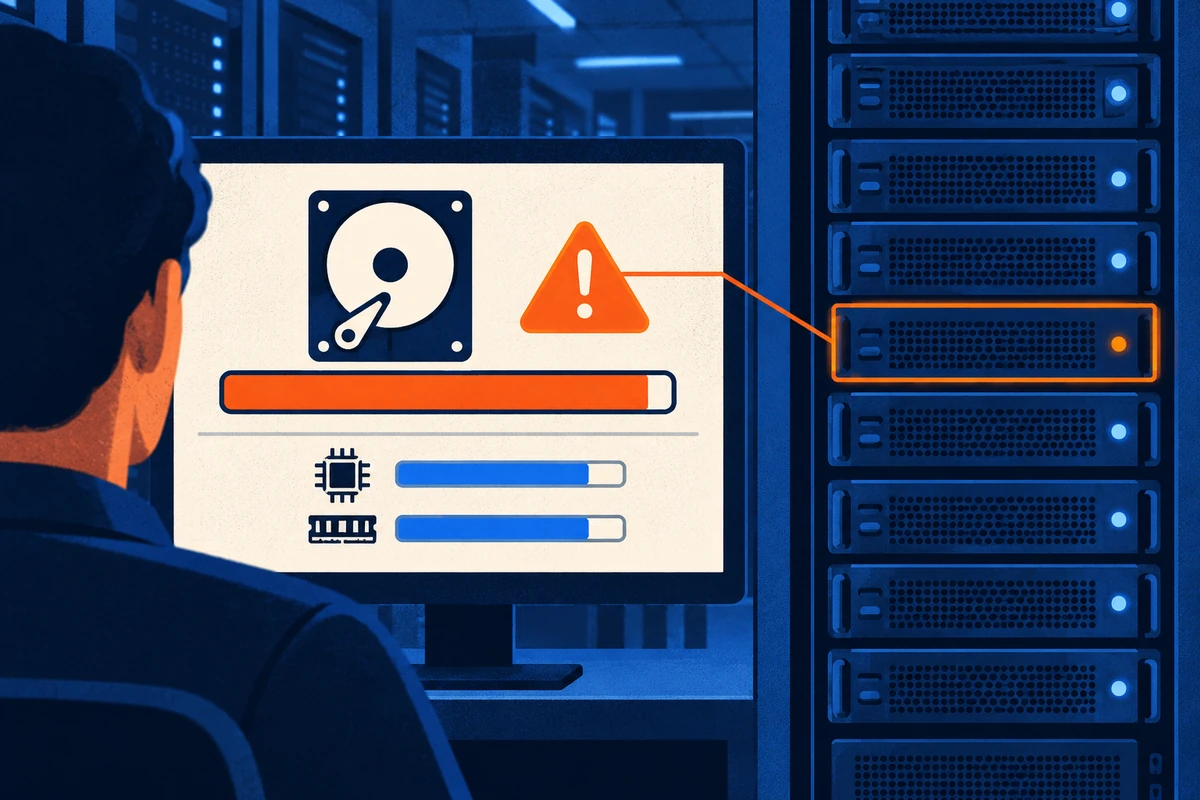
An outage may be new to customers, but its underlying cause could have been developing much earlier. Companies dependent on websites, databases, customer portals, and internal applications can reduce the risk of costly operational interruptions by acting on early warning signs.
Why Waiting Until Something Breaks Is Risky
For an e-commerce company, the busiest sales weekend of the year may be just around the corner. Although the site seems to function normally, the server has a declining amount of available storage as application log growth exceeds expectations.
A surge in website traffic could coincide with the server running out of disk space if the issue remains unaddressed. Proactive server monitoring services help identify conditions such as rising disk usage, unusual resource consumption, failed services, and issues with network connectivity.
A technical problem is not fixed merely because monitoring has detected it. A useful alerting process needs suitable threshold settings, well-defined escalation paths, and technical staff capable of investigating the underlying problem. Without someone who knows how to respond, a notification has little practical value.
Why Server Maintenance Goes Beyond Updates
Control panels, operating systems, application services, and databases require regular maintenance. Before installing security fixes, administrators should assess them and schedule appropriate maintenance periods. Document configuration adjustments and examine performance patterns before capacity problems emerge.
Reliable server management services bring these responsibilities together rather than treating them as unrelated technical tasks. For example, installing an update without assessing application compatibility can introduce new problems. Dependency assessment, change planning, and recovery preparation are steps experienced administrators take before making changes that could disrupt operations. The same attention should be given to backups. The ability to recover backed-up data is not necessarily demonstrated by a message reporting backup success. The effectiveness of recovery processes can be assessed through periodic restoration testing.
Why Maintenance Requirements Differs Between Environments
Running an e-commerce platform on a dedicated server involves operational requirements that differ from a cloud-based development environment.
Administrative practices vary across Linux machines, Windows systems, hybrid infrastructure, and virtual private servers. Support should reflect the operating systems, applications, security needs, and anticipated workloads of the business when choosing server managed services.
For organizations operating multiple cloud instances, support may be necessary to maintain consistent configurations and manage resource utilization. Compatibility checks and carefully controlled updates may require additional care in an organization using older business software. A maintenance schedule suitable for one environment will not necessarily meet the needs of all environments.
Why the Action Taken After an Alert Is So Important
Responding to a production service interruption requires more than simply restarting the affected process. Technicians should focus on identifying the immediate issue, recovering service when feasible, and determining why the incident occurred.
Specialized server support services can assist with troubleshooting, configuration issues, performance problems, security maintenance, and ongoing administration. Preventing every possible incident is not the promise being made. It is to reduce avoidable failures, strengthen preparedness for incidents, and address recurring weaknesses.
Building a More Reliable Operating Routine
Businesses operating dedicated servers, VPS environments, cloud infrastructure, and hybrid systems can obtain 24/7 monitoring, maintenance, server administration, and technical assistance from Bobcares.
Assisting with day-to-day operations and long-term server reliability, Bobcares works alongside internal teams and draws on over 25 years of infrastructure experience.
Whether someone is able to repair a server when it fails is only part of what business owners and IT managers need to consider. It’s whether the right people, monitoring processes, maintenance practices, and recovery procedures are already established before customers experience the consequences of that failure.